Fort Lauderdale Concrete Solutions
Concrete Foundations in Fort Lauderdale, FL
Building Strong from the Ground Up with Fort Lauderdale Concrete Solutions
Concrete foundations are the most important part of a structure as they dictate how long it will last, how well it performs, and ultimately, if it will be stable. The engineers at Fort Lauderdale Concrete Solutions design and install customized concrete foundations to support all types of structures in South Florida due to the high water table and limestone substrates found within the area, as well as the extreme forces generated by hurricanes.
We have installed our concrete foundations on residential homes, commercial buildings, sheds, and additions located throughout Fort Lauderdale and Broward County. Our installations meet or exceed local building codes while taking into consideration each site’s unique soil conditions and structural requirements.
Get A Free Quote
What Is a Concrete Foundation?
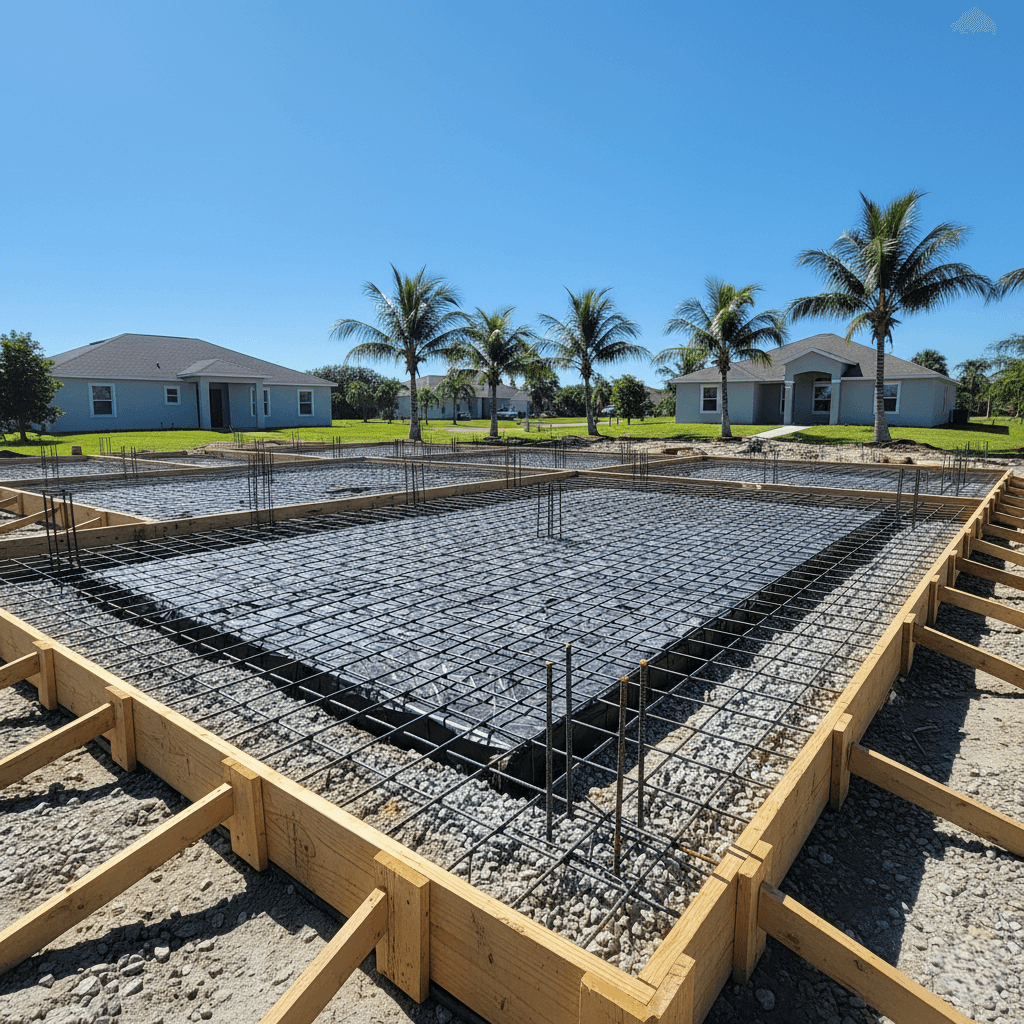
An engineered concrete foundation is responsible for distributing a structure’s weight to the earth via specialized engineered footing & structural load-bearing elements, as well as providing a flat surface for building while preventing excessive settlement and moisture penetration (as well as lateral movement) into the foundation.
Due to Fort Lauderdale’s geological characteristics, there are several issues we will need to contend with when designing an engineered concrete foundation system; our limestone subsurface has a favorable bearing capacity, but can be variable as it relates to depth and quality of limestone present at a given location. Additionally, our high water table creates additional engineering requirements relative to waterproofing and drainage design. Due to hurricane building code requirements, we will design an engineered concrete foundation system that is capable of resisting extreme wind-induced uplift and lateral loads.
When we design an engineered concrete foundation system, we take into account all of the above factors by designing the appropriate depth, reinforcing, and waterproofing components specific to the site conditions of your project.
Concrete Foundation Design Considerations
Shed Foundations
The purpose of a concrete foundation for a shed is to create a solid base that will support the structure without sagging or causing the doors to become out of alignment. A small shed used for minimal storage can be built with a simple slab foundation, while larger, heavier sheds, such as workshops, require a thicker slab or pier system due to the additional weight from equipment.
When we design foundations for sheds, we also take into consideration proper drainage around the perimeter of the structure, since standing water will accelerate the deterioration of wood-based structures.
House Foundations
Homeowners are responsible for paying for the entire weight of their home, including all furniture, clothing, and personal items, and all occupants and other external forces (such as wind and rain) that impact the structure of the house. We meet with the homeowner’s architect and/or structural engineer to verify that the designed foundation meets the structural requirements of the overall structure of the home.
A house foundation should include:
- Adequate thickness to distribute weight evenly.
- Appropriate reinforcement to help control cracking in the concrete.
- A waterproofing system to prevent moisture from entering the home.
- Details for connecting wall framing to the foundation.
- Anchor bolts or hurricane straps as required by local codes.
Building Foundations
Buildings that are commercial in nature and multi-unit residential buildings place much greater pressure and have much more stringent code requirements than single-family homes. Our concrete foundations for buildings address this added pressure by utilizing stronger concrete, heavier reinforcement, and engineered bearing systems.
We work closely with general contractors, structural engineers, and building inspectors to ensure that construction moves forward according to schedule.
Types of Concrete Foundations
Slab-on-Grade Foundations
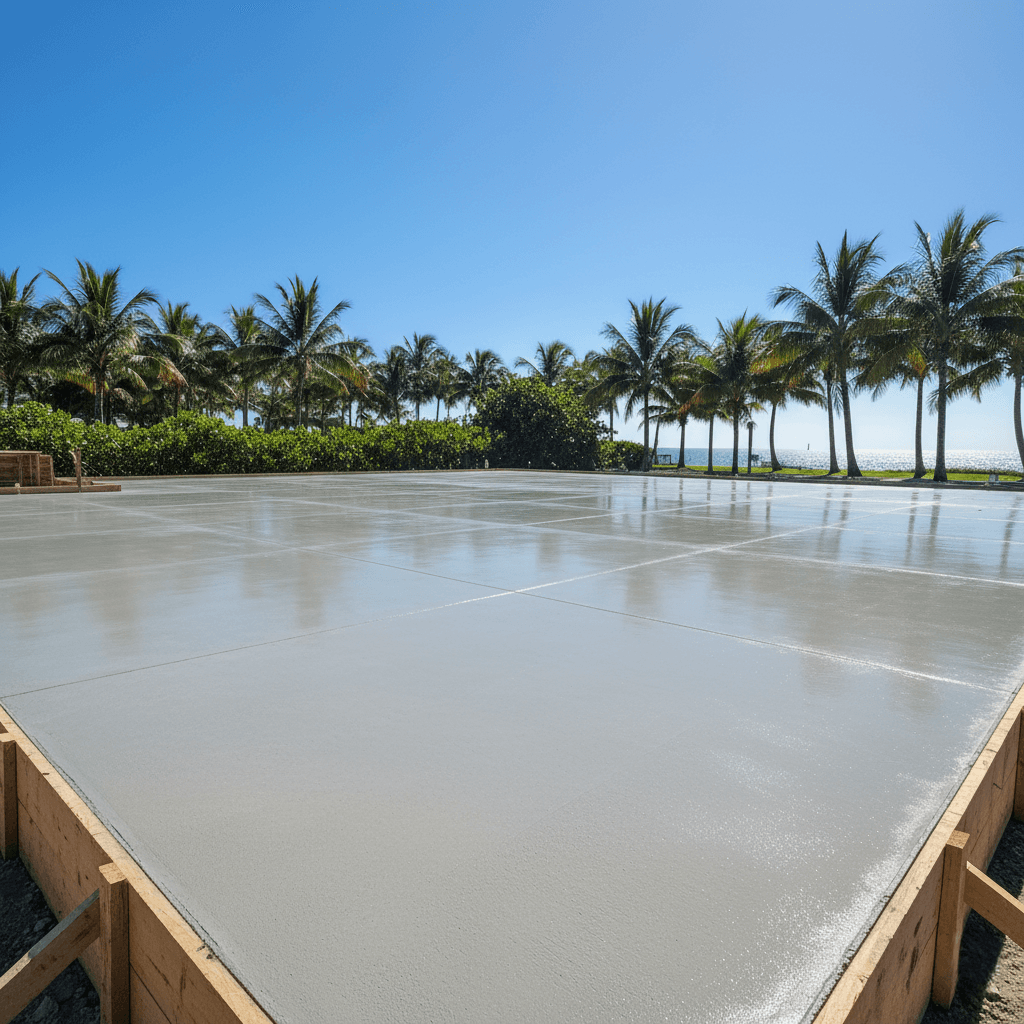
Fort Lauderdale has the largest amount of slab-on-grade foundations compared to other types of foundations. They are economical, fast to construct, and a good option for Florida’s climate. The concrete floor is the same as the foundation and therefore does not require an elevated system for floors.
When we construct a slab-on-grade foundation, we pour it over compacted fill and include a vapor barrier and reinforcement to prevent cracks caused by settling or thermal stress. All plumbing and electrical conduit will be either embedded into or under the slab, and therefore requires great coordination between tradesmen and the contractor during the construction process.
A slab-on-grade can function as long as the water table is low enough so that there is enough elevation between the high water mark and the grade level at which the building sits.
Pier and Beam Foundations
Systems using piers and beams elevate the structure off the ground with concrete piers supporting wooden or steel beams. There are many advantages of using this method in Fort Lauderdale:
- Storm Surge Protection: The elevation of the structure protects against storm surge and street flooding.
- Plumbing and Electrical Systems: While these systems are still buried below the house, they can still be accessed easily from under the house.
- Poor Surface Soils: The piers allow for penetration through poor surface soils until stable bearing strata are reached.
- Air Circulation: Aeration under the house prevents moisture from accumulating in the crawlspace.
Our company spaces the piers appropriately based on the structural loads and soil bearing capacities. The piers must extend far enough down to find solid bearing rock or obtain sufficient frictional resistance in the sand.
Stem Wall Foundations
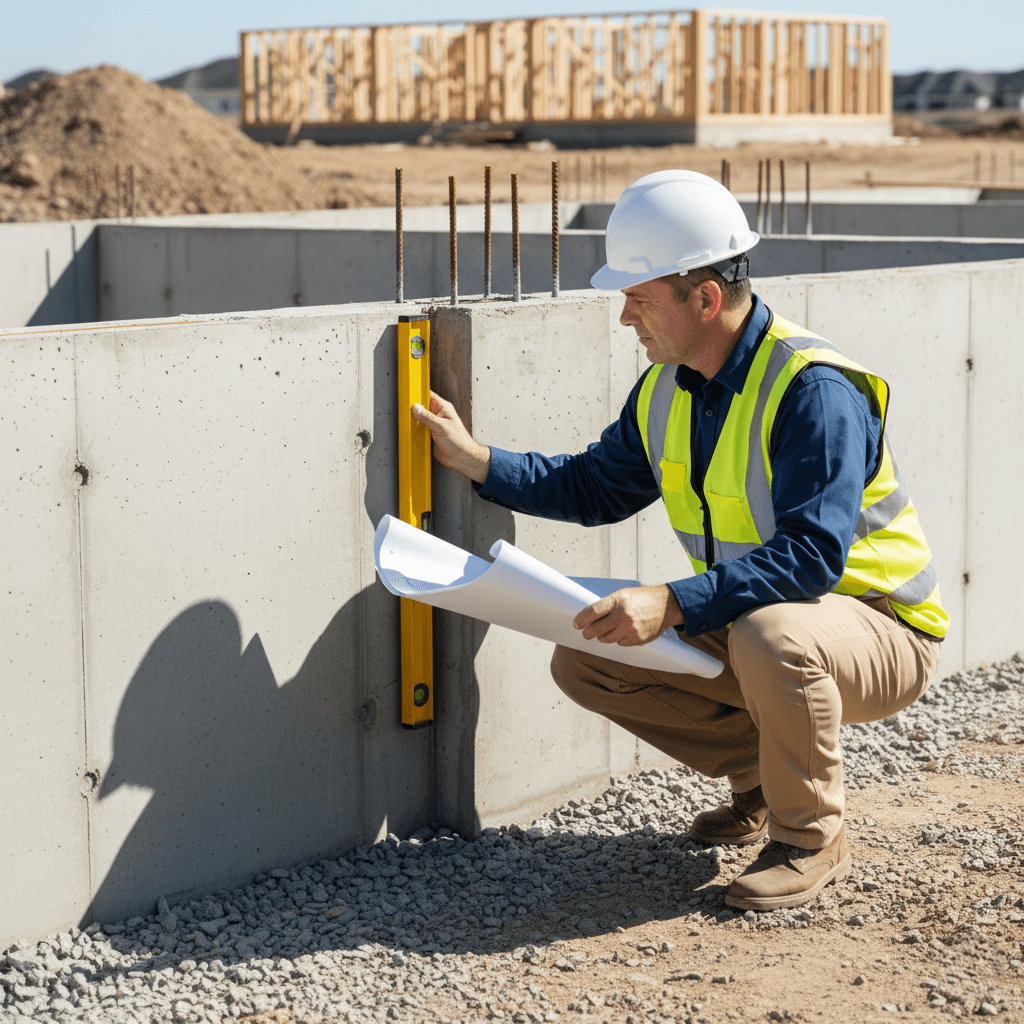
Stem wall foundations consist of perimeter concrete walls and interior slabs. The walls bear the weight of the structure, while the slab bears the weight of people and objects on the floor. A combination of perimeter walls and interior slabs is the best option for homes that have some elevation requirements and/or specific drainage requirements.
We base our designs on the height of the stem walls on the required flood elevation of the property and on what the finished floor height will be above the grade level.
Basement Foundations
Although rare in Fort Lauderdale, basement foundations may be beneficial to specific properties or their intended use. Basement foundations will require extensive waterproofing, drainage systems, and dewatering during construction.
The cost of constructing a basement foundation will be substantially greater than the other methods of constructing a foundation. Therefore, we work with structural engineers to develop a design for the basement foundation that meets the site-specific groundwater conditions.
Concrete Foundation Installation Process
Installation of a foundation is typically executed in a specific order as outlined below.
- Review Engineering Specifications: This review process will confirm that the engineered design of your structure meets all structural requirements and complies with local building codes.
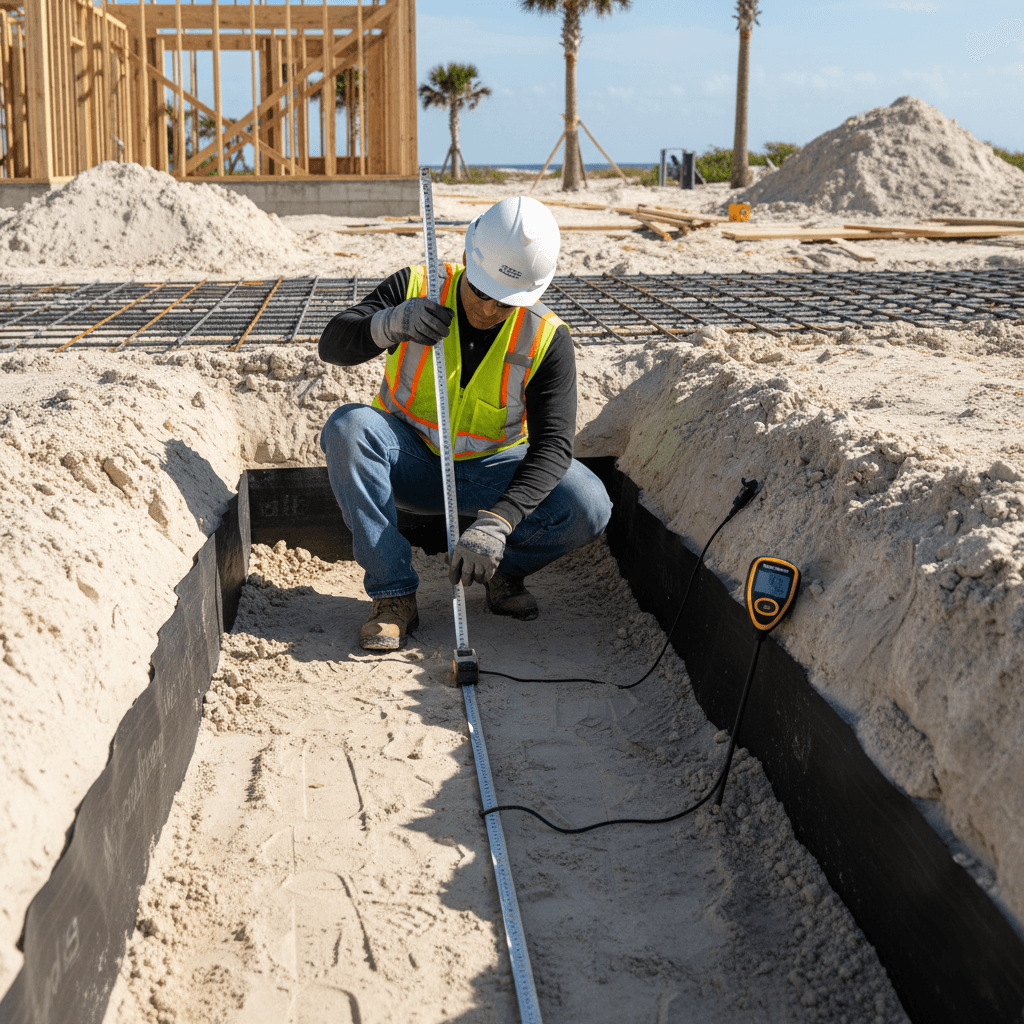
- Conduct Site Survey: A site survey will determine both the elevation and the boundaries of your property.
- Excavate the Site: The removal of material from the site to create sufficient depth for footings.
- Inspect Site Excavation: The building department will inspect to verify that the depth of the excavation has been accomplished to specifications and that the soil conditions are suitable for the project.
- Set Footing Forms: Set the footing forms for the perimeter and any interior footing(s).
- Install Rebar in Footings: Install rebar according to engineering specifications.
- Pour Footings: Pour the concrete for the footing(s) and allow to cure.
- Set Stem Wall Forms: If applicable, set the forms for the foundation walls.
- Install Vertical and Horizontal Rebar in Walls: Install rebar vertically and horizontally throughout the walls.
- Pour Foundation Walls: Pour the concrete for the foundation walls.
- Apply Waterproofing Coatings: Apply waterproof coatings such as membranes or other protective measures for moisture prevention.
- Install Perimeter Drainage System: Install the perimeter drainage system.
- Backfill Around Foundation: Backfill and compact the soil surrounding the foundation.
- Prepare Slab Area: Install any necessary utility lines under the slab area, including vapor barriers and rebar.
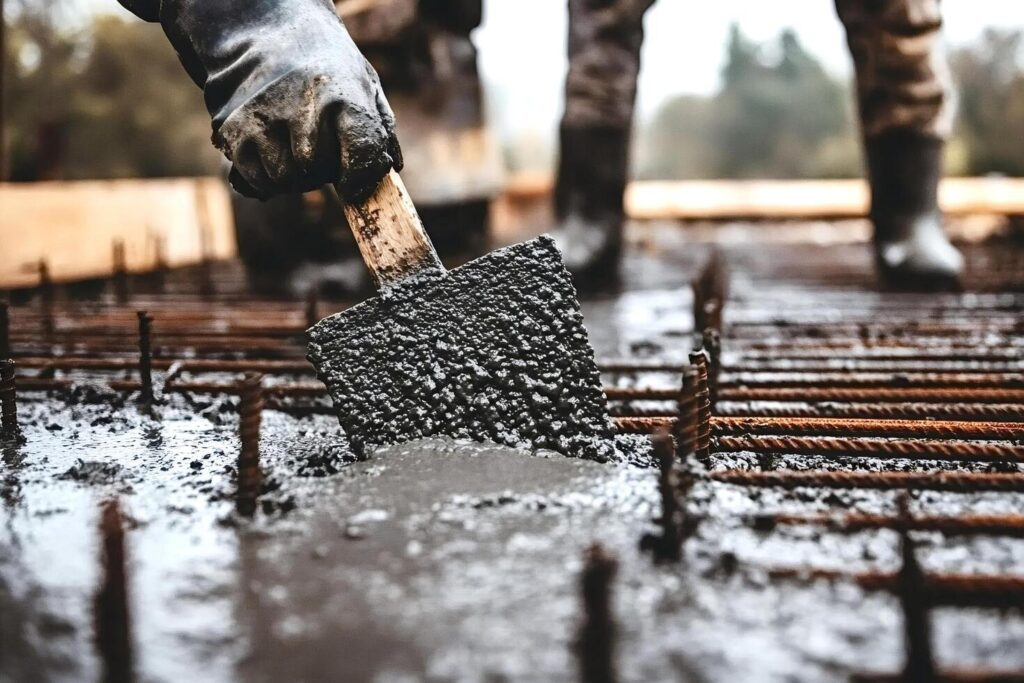
- Pour Concrete Floor Slab: Pour and finish the concrete floor slab.
- Cure the Concrete: Protect the concrete until it develops the required amount of strength.
- Final Inspection by Building Department: The building department will conduct a final inspection to verify that all work has been completed to code.
The timeline can vary greatly depending on the type of foundation being installed and the size of the building. For example, installing a simple shed foundation can be completed in one week, while residential house foundations usually take two to three weeks to install. Commercial foundation installations can take weeks to months to complete.
Why Choose Fort Lauderdale Concrete Solutions for Your Foundation?
Local knowledge: In our history of installing foundations in Fort Lauderdale, we have learned about local soil conditions, local fluctuations in the water table, and local requirements of Broward County for foundations.
Coordination with Engineers: The quality of service that we provide is achieved by coordinating services with structural engineers, architects, and building departments so that the foundations are designed and constructed as required by their respective designs and regulations.
Use of Quality Materials: We produce concrete mixes with the strength as called out in the specifications; we purchase reinforcing steel that meets structural grade requirements.
Compliance with Building Codes: Because we do what the plans say and comply with the building codes, we pass during the building inspection of our installations.
Reliable Scheduling: When you construct a building, you need to complete the foundation to start constructing the rest of the building. Therefore, we make sure that we can deliver the foundation when needed by providing an adequate number of personnel and resources to perform the construction of the foundation.
Protection of Your Investment Through Comprehensive Insurance: Throughout the construction process of your project, your investment is protected by comprehensive insurance.
Ready to Build on Solid Ground?
Whether you’re planning a new home, adding to an existing structure, or building commercial space, your project’s success begins with a properly engineered and installed foundation.
Contact Fort Lauderdale Concrete Solutions today to discuss your foundation requirements and receive a detailed quote.
Phone: (754) 354-4465
Email: [email protected]
Fort Lauderdale Concrete Solutions—engineering concrete foundations that support your vision and withstand South Florida’s challenges.