Fort Lauderdale Concrete Solutions

Concrete Paths and Walkways in Fort Lauderdale, FL
Durable and Stylish Concrete Walkways
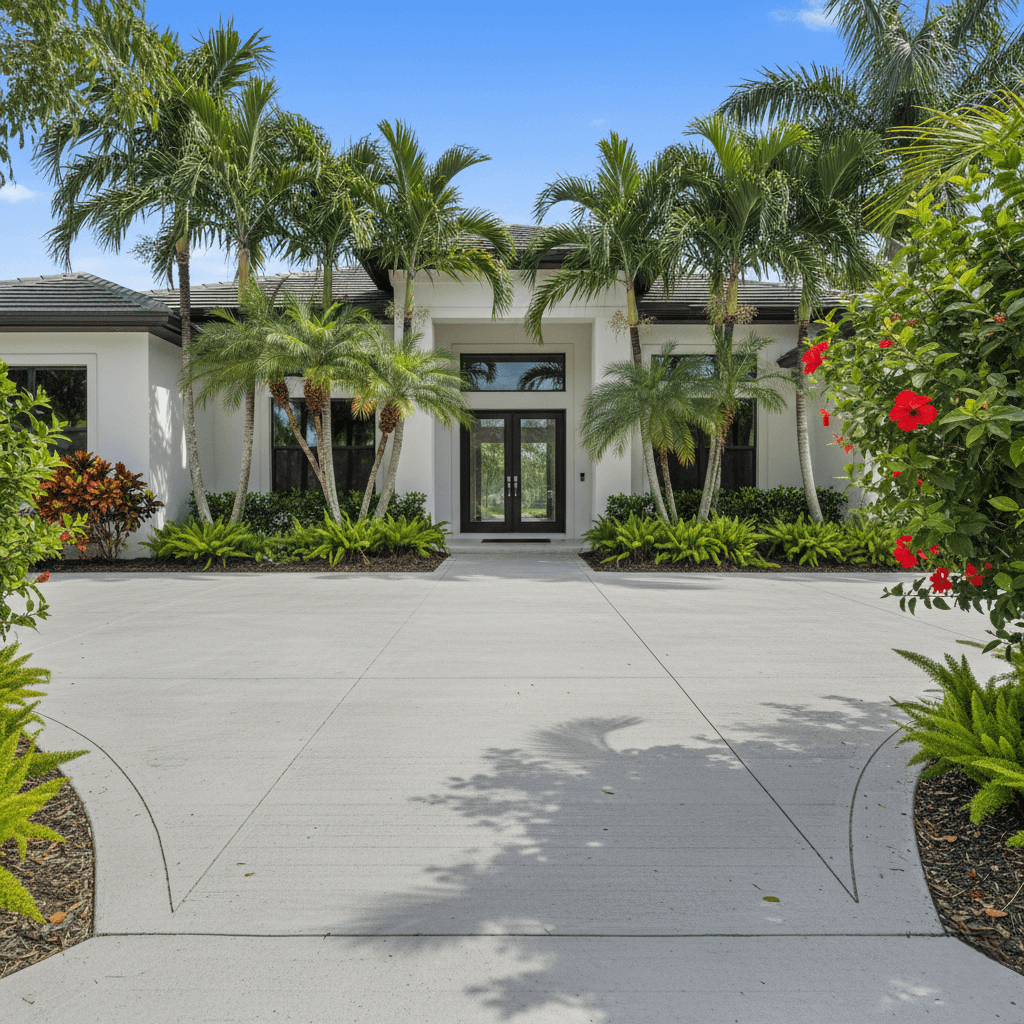
Concrete pathways as well as walkways provide connections for separate outdoor areas, direct pedestrian traffic and add an element of style to a property’s overall aesthetic. Fort Lauderdale Concrete Solutions designs and installs sidewalks that will endure South Florida’s climate conditions in addition to providing an attractive fit with your landscape or architectural style.
We consider drainage patterns, access requirements, and connections to other hardscape when designing and installing each sidewalk. Each sidewalk is prepared with the correct base materials and reinforced correctly for its area, and finished accordingly.
Get A Free Quote
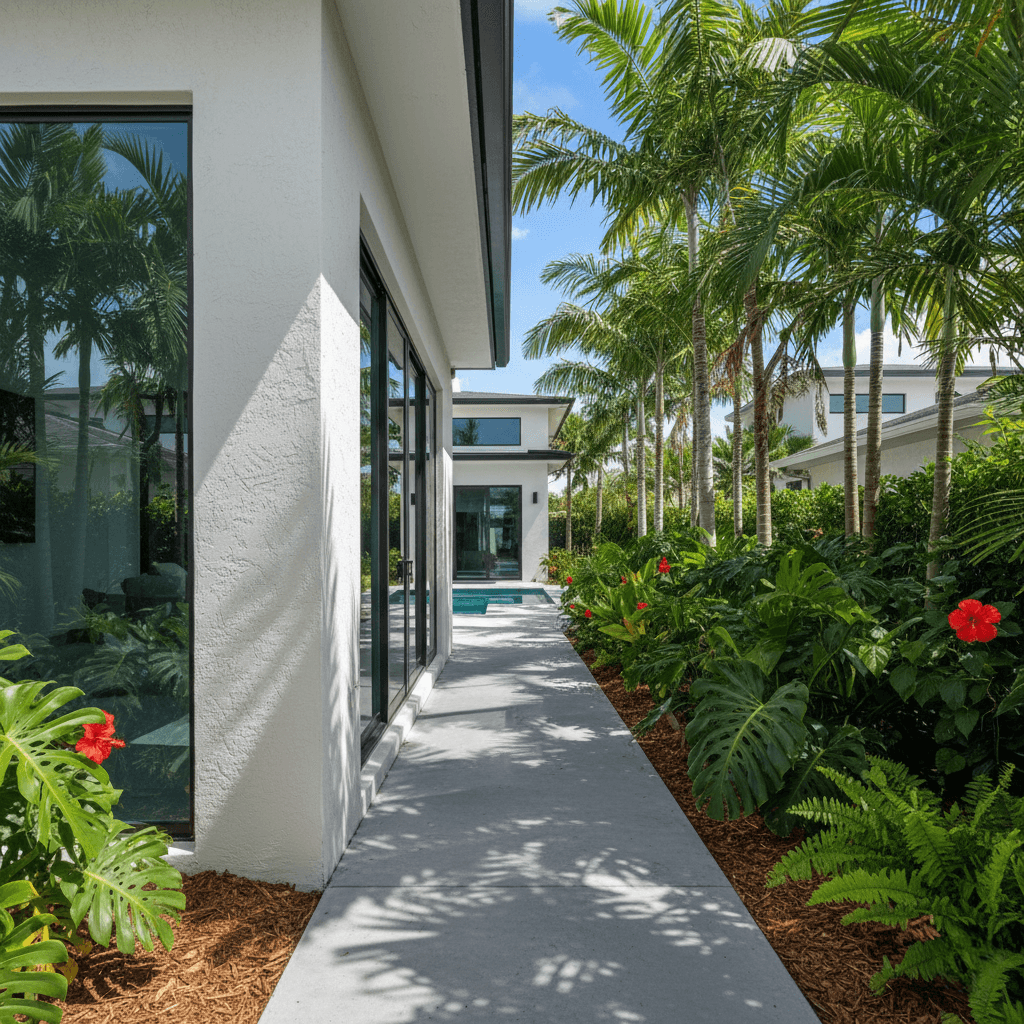
Concrete Paths and Walkways Around House
There are several ways a perimeter walkway or path around your home can be utilized;
Utility Access: Pathways allow you to reach your utilities, A/C units, and other storage locations in a safe manner.
Maintenance Access: Stable pathways provide a solid surface to place ladders on and to move equipment to when performing routine maintenance on your home.
Drainage: The slope of the pathway directs water away from the foundation of your home.
Landscape Definition: The perimeter walkway defines the boundary line of where the planting beds begin and end, which will make it easier to mow the lawn.
We design and build concrete paths/walkways that surround homes, typically at least 3 to 4 feet wide to allow ample space to comfortably pass by, sloped appropriately to properly drain water away from the wall of the foundation, and designed to integrate with existing driveways, patios, and entrance walks.
Concrete Paths and Walkways Design
A well-designed walkway provides a balance of aesthetic appeal and functional usability.
Walkway Widths: Entrance walkways should have widths of 4-6 feet to allow for comfortable two-way passage. Side-yard paths can be as narrow as 3-4 feet, and garden paths can be as narrow as 2-3 feet, allowing for single-file passage.
Curves in Walkways: Curved sections of walkways can appear natural and allow walkers to incorporate the surrounding landscape into their route. Sharp turns in walkways create unnatural walking patterns and an unappealing view.
Drainage and Slope on Walkways: Walkways are designed to have a small amount of slope for drainage (a typical slope is 1-2%) while avoiding excessive slope, which can create accessibility challenges and/or erosion problems.
Details for Transitions Between Walkways and Other Features: The smooth transitions between walkways and driveways, patios, steps, etc., and building entries, will improve the general appearance of the area and help to eliminate potential tripping hazards.
Types of Concrete Walkways
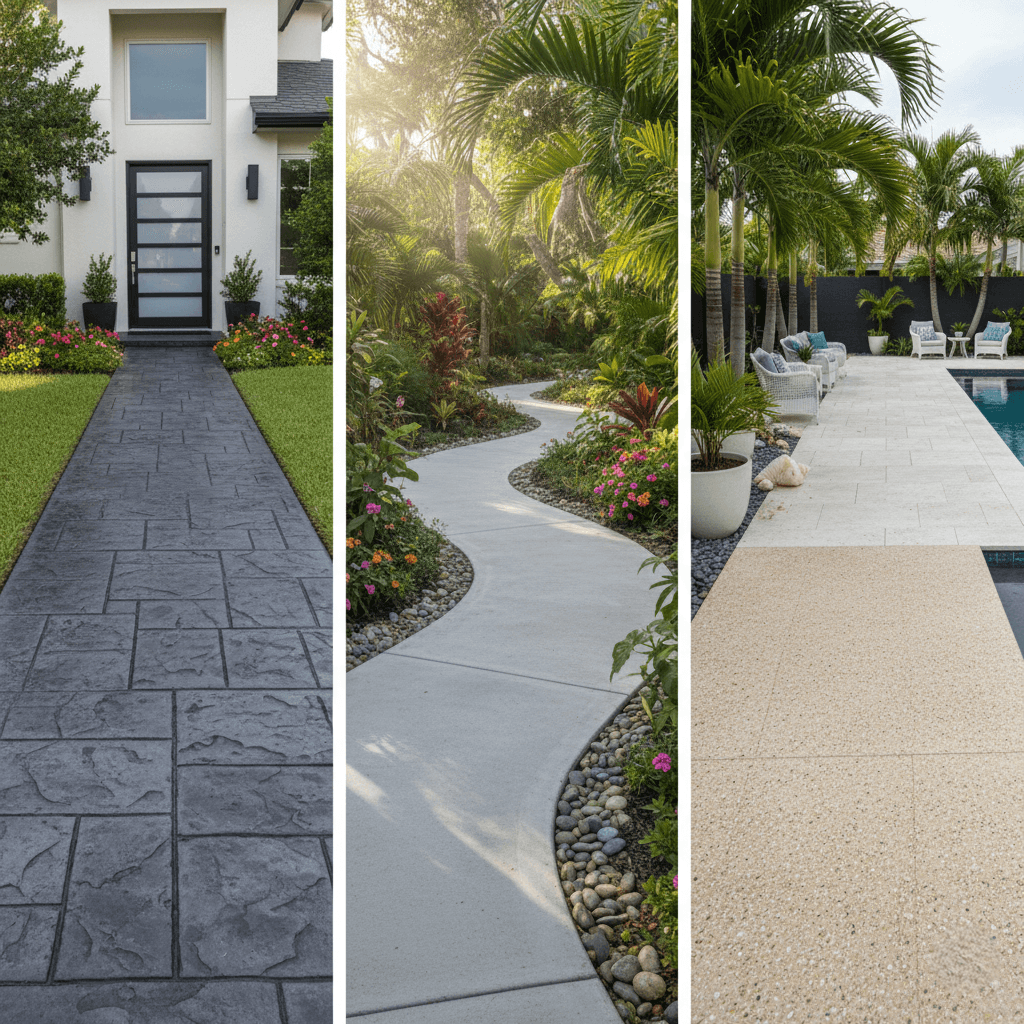
Standard Concrete Walkways
A standard walkway using a broom-finished concrete is an inexpensive yet effective way to connect an outdoor area. A textured finish is slip-resistant when wet, as it is here in Fort Lauderdale due to the frequent afternoon rains.
A standard walkway works well for accessing the side yard, for use as a service walkway, or for an area where functionality is the primary concern and aesthetics are secondary.
Stamped Concrete Walkways
Stamped concrete walkways allow you to have a variety of designs that will look like many different types of masonry products, such as brick, natural stone, etc. There are many different stamped designs available, ranging from a classic running bond brick design to a flagstone design.
Decorative stamped walkways add value to your property by enhancing its beauty of your property and they also maintain all the benefits that you receive from using concrete for your walkways compared to using actual pavers. Stamped walkways can be colored to match or accentuate your home’s exterior colors.
Exposed Aggregate Walkways
An exposed aggregate walkway exposes the decorative stone (such as pea gravel or river rock) embedded in the concrete and creates a textured, visually interesting surface that provides traction and hides minor wear. Exposed aggregate is a great choice for walkways in tropical landscaping, as it adds an element of texture to your walkway that is consistent with the surroundings of Fort Lauderdale.
You can choose the size and type of aggregate that will be used in your exposed aggregate walkway based on your personal preference.
Colored Concrete Walkways
Adding color to your walkway, whether it is by integral coloring the concrete or by applying a surface stain, adds visual interest to your walkway. Earth-toned colors will work well in most Fort Lauderdale landscapes. If you want to create a custom color for your walkway, you can do so, and the color will coordinate with the colors of your home’s exterior or create a dramatic contrast with the colors of your plants.
In addition to being easier to clean than painted walkways, colored walkways retain their color longer than painted walkways because paint chips off in this climate, requiring frequent touch-ups.
Concrete Garden Paths
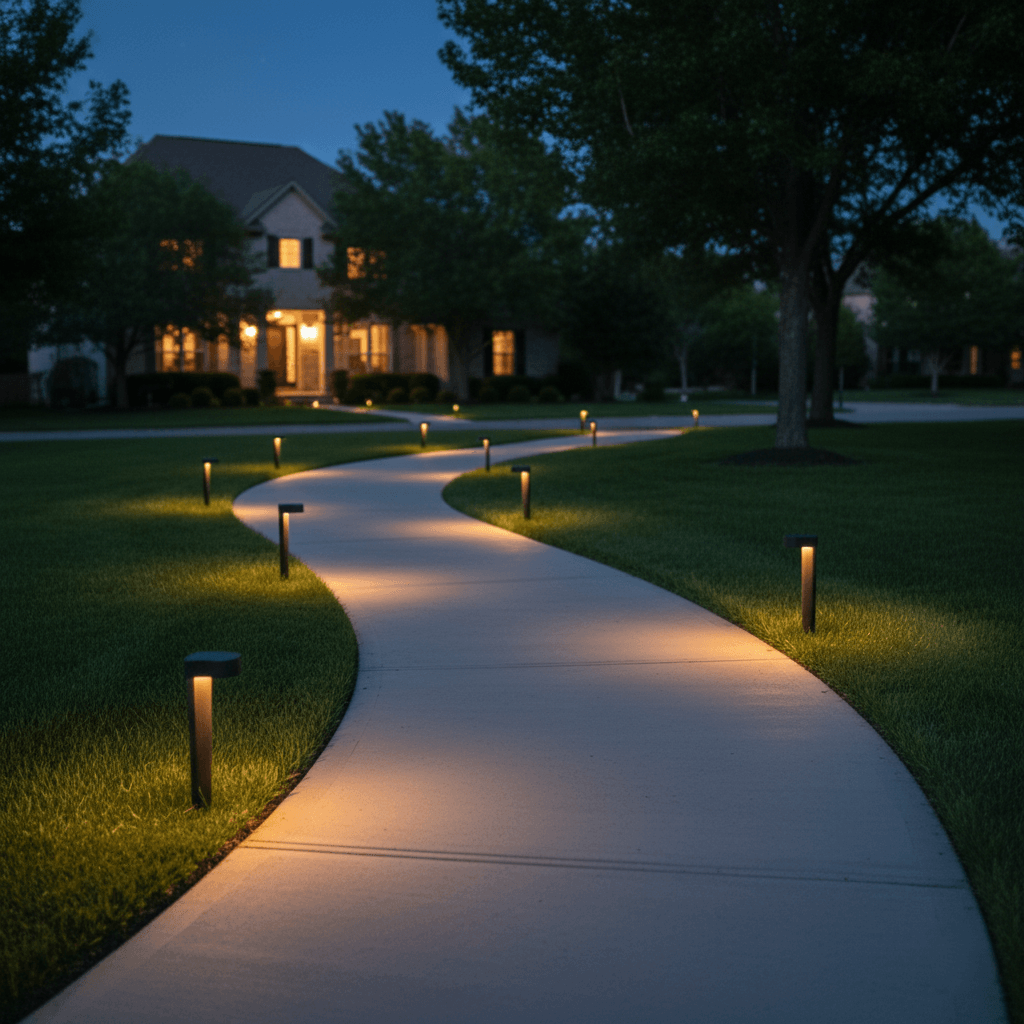
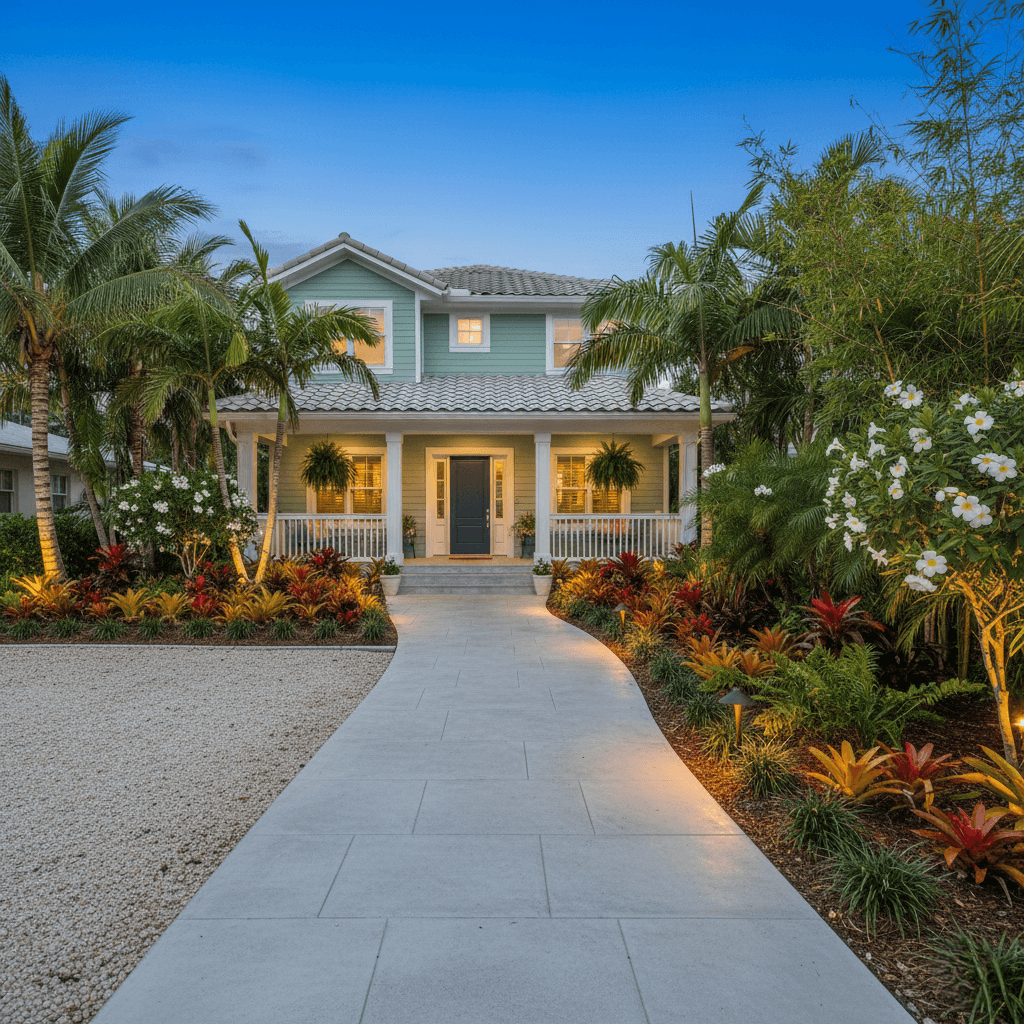
Concrete garden paths can help direct visitors through your landscape by providing a route through the gardens and protecting the planted beds from foot traffic. When we design a concrete garden path, we try to create curves that feel natural, not forced; a width that is proportional to the garden; and a surface that complements rather than competes with the plantings.
Depending on how you envision your garden path, we can design a path with a simple stepping stone design, a winding path with a series of narrower routes, or a wide processional walkway.
Concrete Paths and Walkways Construction
We have a method of building that will result in a durable product:
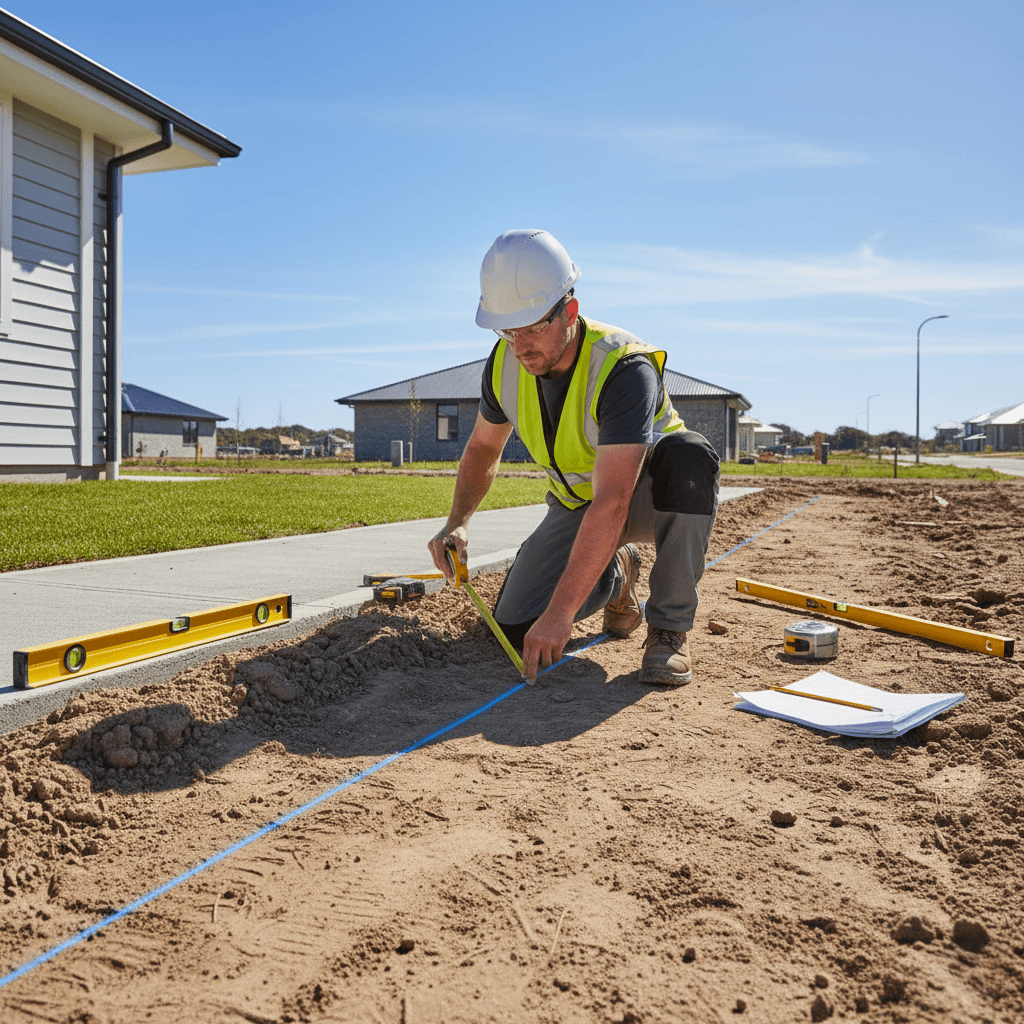
Layout: Define where you want to be able to walk and get approval of this route from the landowner
Excavation: Dig enough so that your walkway is at least 6-8 inches below grade
Base Preparation: Compact the base material of your walkway so it can support the weight of people and/or vehicles
Form Setting: Set up forms that are accurate as to size, shape, and elevation
Reinforcement: Lay down wire mesh or synthetic fibers to help prevent cracking
Concrete Placement: Mix, pour, and finish the walkway with a concrete mix that is suitable for the size and configuration of your walkway
Finishing: Texturize the walkway according to your wishes
Jointing: Make cuts in the walkway that are intended to allow for controlled crack placement
Curing: Protect the walkway while the concrete develops its strength
Sealing: Once the walkway has developed sufficient strength, apply a protective coating.
The process typically takes between 5-7 days from excavation to sealing. Typically, you will need to wait 24-48 hours after the walkway has been placed prior to walking on it, and wait 7 days after placement prior to placing excessive loads on it.
Concrete Paths and Walkways Garden Design
When a path is built into a yard, it integrates with other aspects of your yard’s landscaping:
Boundary Definition: The border of a planting bed creates a physical boundary for the planting bed and a path; this will make maintaining the planting bed easier by creating a barrier to help protect the plants in the bed from being walked on and damaged.
Access: The path gives you and others access to different focal points such as a fountain, sculpture, bench, etc.
Change in Perspective: A curved path allows you to see the garden from multiple angles, depending on where you are walking in the garden.
Harmony With Other Elements Of Your Yard: The color and texture of the material you use for your path should be harmonious with other elements in your yard (plants, trees, fences, buildings, etc.).
We work with landscapers, or we can work with homeowners to design a path that enhances their yard instead of dominating their yard.
Ready to Connect Your Outdoor Spaces?
Well-designed concrete paths and walkways improve property function while enhancing landscape aesthetics. They guide traffic safely, protect planted areas, and create cohesive circulation through outdoor spaces.
Contact Fort Lauderdale Concrete Solutions today to discuss your walkway needs and receive a detailed quote.
Phone: (754) 354-4465
Email: [email protected]
Fort Lauderdale Concrete Solutions—building concrete walkways that guide your steps and complement your landscape.