Fort Lauderdale Concrete Solutions
Fort Lauderdale Concrete Solutions - Frequently Asked Questions
If Your Question Is Not Answered Here Drop Us A Line
What expenditure parameters should property owners anticipate for standard residential concrete driveways in Fort Lauderdale?
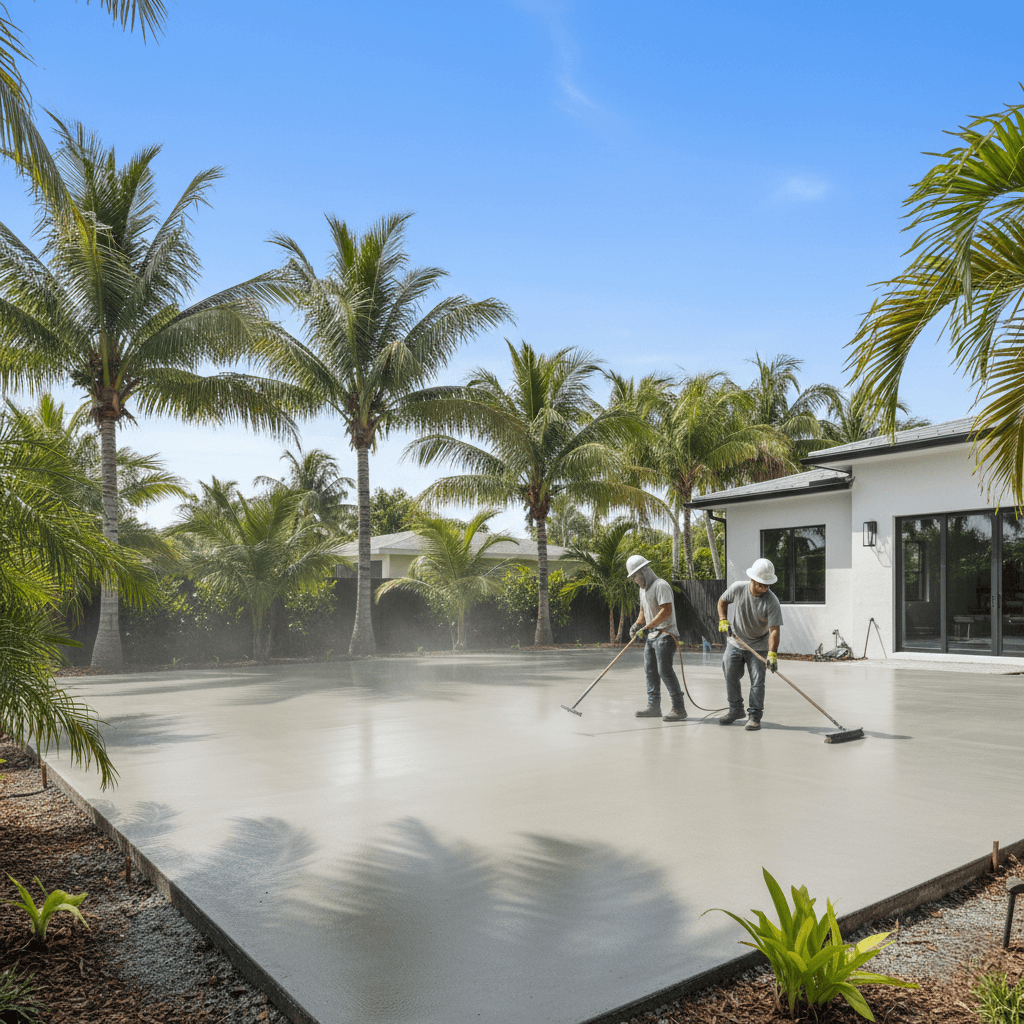
Concrete driveway cost in Fort Lauderdale, Florida, ranges from $6 to $11 per square foot for unreinforced concrete (not including demolition of existing driveway). Installing a concrete driveway now costs $2,880 to $5,760 on average, or $4.80 to $9.60 per square foot for plain gray concrete. Adding decorative colors, borders, stamped patterns, and finishes now costs $9.60 to $21.60 per square foot.
What represents the typical investment range for professional protective sealing services in Fort Lauderdale?
To have your driveway sealed by a professional contractor, the cost averages between $1 and $2 per square foot. To seal it yourself, you can expect materials to cost $.50 to $.75 per square foot. In Fort Lauderdale’s tropical climate with intense solar exposure and salt spray conditions, professional-grade sealers applied by experienced specialists often deliver superior protection compared to consumer-grade alternatives.
What cost differential exists between high-end decorative concrete and standard broom-finished surfaces?
High-end concrete driveways represent the pinnacle of decorative concrete work, ranging from $20 to $25+ per square foot for the materials and labor. These projects typically involve multiple techniques like stamping, staining, and hand-detailed artistry to create truly unique surfaces. Premium finishes significantly elevate project expenses but provide distinctive visual appeal and enhanced property valuation.
Are building permits mandatory for concrete driveway and patio installations in Fort Lauderdale?
Yes, a Zoning permit only is required. Gravel driveways are not allowed within the Riverland annexed and Broward County zoned areas. Most concrete installations in Fort Lauderdale require permits. The City of Fort Lauderdale Development Services Department manages permit requirements for properties within municipal boundaries, while unincorporated areas fall under Broward County jurisdiction.
What slope gradient should driveways and patios incorporate for effective water management in Fort Lauderdale?
A slope gradient of 1/8 inch to 1/4 inch per foot facilitates water drainage away from structures. Proper grading proves critical in Fort Lauderdale to prevent standing water accumulation, which accelerates surface deterioration, encourages algae colonization, and creates safety hazards during rainy seasons. Inadequate drainage substantially reduces surface lifespan through repeated water infiltration.
Can new concrete be installed as an overlay on existing sound concrete foundations?
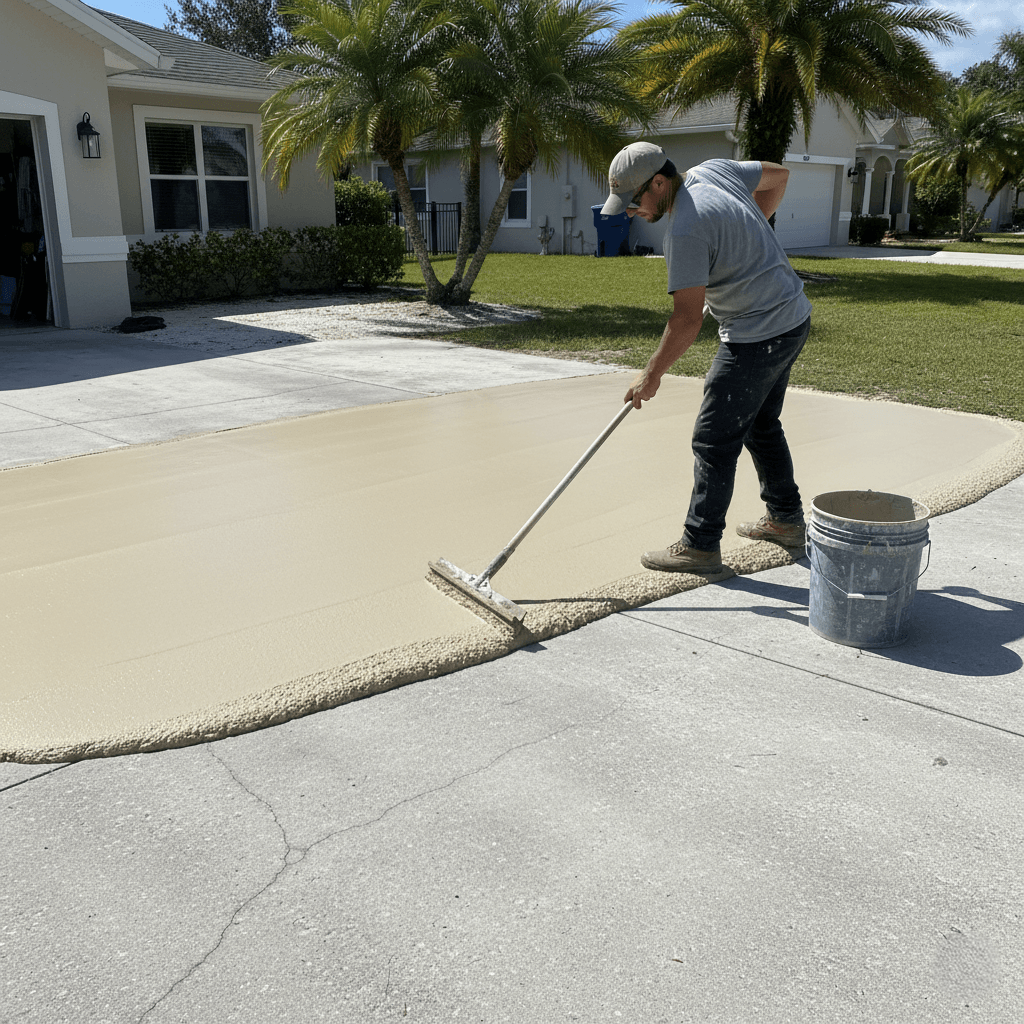
Overlay applications function effectively over existing concrete foundations provided base surfaces demonstrate structural soundness, thorough cleanliness, and absence of major structural damage. Thin overlay applications deliver attractive cosmetic revitalization, though substantial structural repairs demand complete removal and new installation. Fort Lauderdale’s moisture conditions necessitate meticulous base preparation and moisture management.
Are minor hairline fractures considered normal in concrete installations, or do they indicate structural problems?
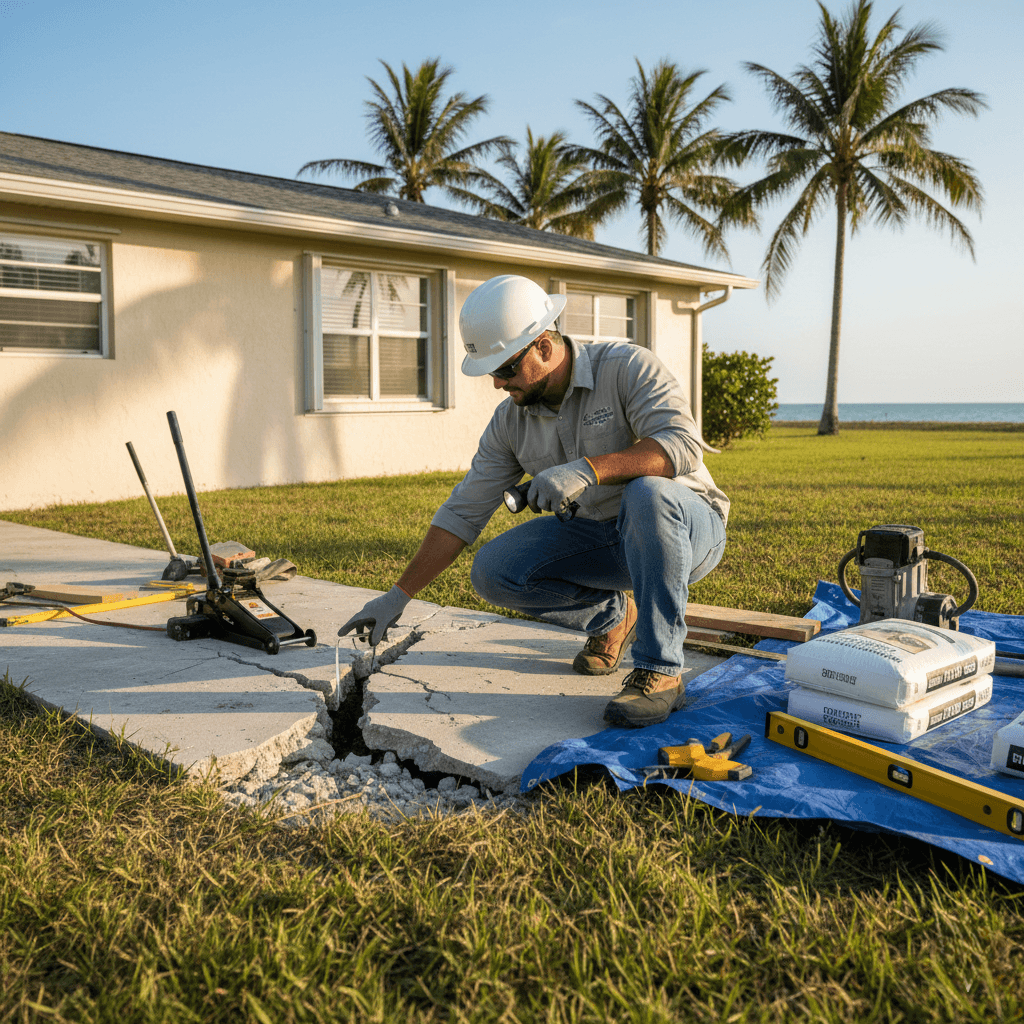
Small hairline cracks resulting from natural concrete shrinkage are generally not indicative of structural problems. Fractures that are wide, deep, or demonstrating expansion patterns may indicate settlement complications, foundational issues, or environmental stress requiring professional evaluation. In Fort Lauderdale’s moisture-saturated environment, fractures should receive prompt sealing treatment.
What should property owners ask concrete contractors before engaging their services?
Request current licensing verification and proof of adequate insurance protection, professional references from recently completed projects, comprehensive timeline estimates and scheduling details, post-installation cleanup procedures, warranty parameters and coverage terms, joint placement and slope management plans, and demonstrated experience with Fort Lauderdale’s particular climate challenges, including salt resistance and humidity management.
What cost differential exists between complete driveway replacement and resurfacing solutions?
Full replacement typically costs 2-3 times more than resurfacing. Resurfacing addresses cosmetic issues like minor cracks, surface wear, and discoloration without requiring complete removal and reconstruction. Full replacement becomes necessary when the driveway exhibits significant structural damage, deep cracks, major settling, or extensive deterioration. Fort Lauderdale’s tropical climate may necessitate replacement more frequently than drier regions.
What factors influence the total cost per cubic yard when ordering ready-mix concrete for Fort Lauderdale projects?
Ready-mix concrete pricing depends on strength rating specifications, with costs ranging from $120-$200 per cubic yard, depending on requirements. Additional cost considerations include premium charges for orders under minimum quantities, equipment rental for pump truck access when site conditions are constrained, transportation costs based on distance from supplier facilities, and specialty chemical additives. Hot weather conditions may affect pricing and handling.
What thickness should residential driveway concrete slabs be in Fort Lauderdale?
Standard residential driveways in Fort Lauderdale typically utilize a 4-inch thickness as a baseline specification. For properties anticipating heavier vehicle usage, RV storage, or commercial vehicle traffic, a 5-6 inch thickness provides enhanced durability. Thicker sections reduce cracking probability and extend service intervals, proving especially valuable in Fort Lauderdale’s moisture-heavy environment.
What temperature conditions prove optimal for scheduling concrete installation activities in Fort Lauderdale?
Spring through early autumn generally presents favorable conditions for pouring concrete in Fort Lauderdale. Temperatures between 50-85°F provide ideal conditions, though Fort Lauderdale’s consistently warm environment makes scheduling more flexible than northern climates. Avoid scheduling pours during peak heat hours when rapid evaporation compromises quality. Professional contractors monitor forecasts strategically.
How does heavy vehicle traffic influence driveway design specifications and reinforcement requirements?
Heavy vehicles, including RVs, commercial trucks, and specialty equipment, demand thicker slab installations (5-6 inches), enhanced reinforcement utilizing rebar components, and thoroughly compacted base materials. Standard residential specifications may demonstrate cracking vulnerability under frequent heavy-load conditions. Communicate anticipated traffic patterns to contractors during design consultations.
What distinguishes sealed concrete from unsealed concrete, and does protective sealing truly prevent environmental damage?
Sealed concrete resists staining, moisture infiltration, and salt spray damage. Unsealed installations demonstrate vulnerability to cracking, deterioration, surface discoloration, and efflorescence development. In Fort Lauderdale’s coastal environment with salt spray exposure and persistent moisture, sealing represents an essential investment in surface longevity. Regular resealing every 12-18 months maintains protection effectiveness.