Fort Lauderdale Concrete Solutions
Menu
Fort Lauderdale Concrete: Proper Curing & Moisture Tips
Pouring Concrete Fort Lauderdale
Fort Lauderdale’s coastal environment presents special challenges for concrete construction, especially when it comes to curing and moisture control. High humidity, salt air, and frequent rainfall can affect the strength, durability, and longevity of concrete structures. For homeowners and contractors, understanding the importance of proper curing and moisture management is key to getting great results. By following best practices for Fort Lauderdale’s climate, you can ensure your concrete projects stand the test of time and environmental stressors.
The Science of Concrete Curing
What Happens During Curing
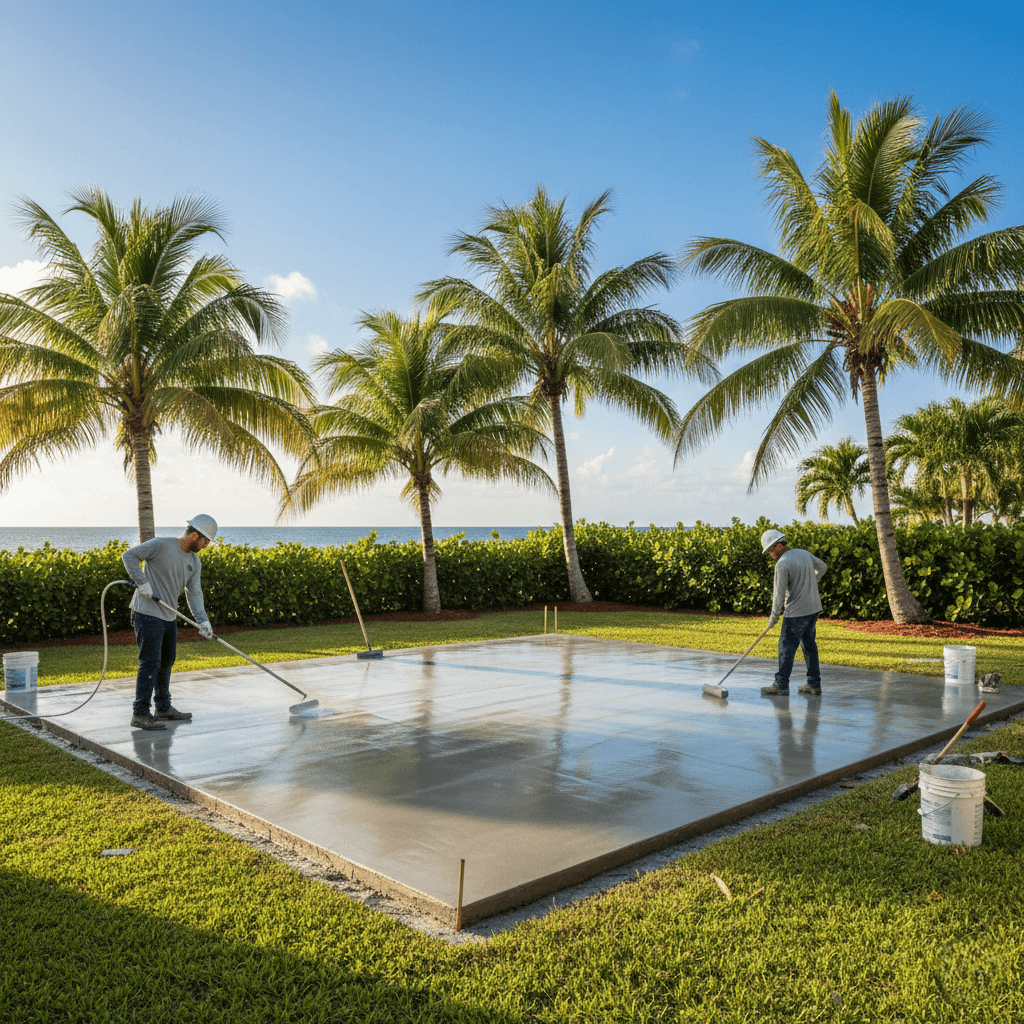
Curing is a critical phase of concrete construction where the concrete gains strength and durability. This involves maintaining the right moisture and temperature to allow the concrete to hydrate. In ideal conditions, curing can take up to 28 days, with most of the strength development happening in the first week. Proper curing ensures the concrete reaches its full potential in hardness, crack resistance, and overall longevity.
Why Curing is Especially Important in Coastal Areas
In coastal areas like Fort Lauderdale, curing is even more critical due to the high humidity and salt exposure. Improper curing can result in a weak, porous surface that’s susceptible to salt corrosion, moisture absorption, and cracking. By controlling moisture and temperature during curing, you can create a dense, durable concrete surface that resists environmental damage and maintains its structural integrity.
Challenges of Curing Concrete in Fort Lauderdale
High Humidity and Moisture Retention
Fort Lauderdale’s high humidity can interfere with the curing process by retaining too much moisture. While moisture is necessary for proper hydration, too much can cause surface defects like scaling or dusting. High humidity can also slow down the curing process, delaying the concrete’s strength development. Contractors often use dehumidifiers, fans, or curing compounds to regulate moisture and ensure optimal curing conditions.
Salt Air and Its Effect on Concrete
Salt air is a constant challenge in coastal environments, as it accelerates the corrosion of concrete and embedded reinforcement. During the curing process, salt can penetrate the concrete’s surface, causing long-term durability issues. To combat this, contractors may use sealants or protective coatings during curing to create a barrier against salt intrusion. These measures help preserve the concrete’s strength and appearance even in harsh coastal conditions.
Best Practices for Curing Concrete in Fort Lauderdale
Curing Compounds and Membranes
Curing compounds and membranes are great tools for controlling moisture during the curing process. These are applied to the concrete’s surface shortly after pouring, creating a barrier to prevent moisture loss. In Fort Lauderdale’s humid climate, curing compounds can help balance moisture retention so the concrete cures evenly and reaches its desired strength.
Wet Curing Methods
Wet curing methods, like covering the concrete with wet burlap or using a sprinkler system, are effective in hot and dry conditions. But in Fort Lauderdale’s humid environment, these methods need to be managed carefully to avoid over-saturating the concrete. Wet curing can be beneficial during low-humidity or high-temperature periods to maintain the necessary moisture for proper hydration.
Temperature Control
Temperature control is another critical aspect of the curing process. In Fort Lauderdale, where temperatures fluctuate, it’s important to maintain a consistent temperature range—ideally between 50°F and 75°F—to ensure optimal curing. Insulating blankets or temporary enclosures can be used to regulate temperature, especially during cooler months or unexpected cold snaps.
Moisture Control for Long-Term Durability
Proper Drainage and Site Preparation
Moisture control starts before the concrete is poured with proper site preparation and drainage. Make sure the site is graded correctly, and drainage systems are in place to prevent water from pooling around the concrete structure. In Fort Lauderdale, where heavy rainfall is common, effective drainage is crucial to avoid water infiltration and potential long-term damage.
Vapor Barriers and Waterproofing
Vapor barriers and waterproofing membranes can be installed beneath the concrete to prevent moisture from seeping up from the ground. These are especially important in coastal areas where high water tables and frequent rainfall can cause excessive moisture exposure. By incorporating vapor barriers in the design, you can protect the concrete from below-grade moisture and improve overall durability.
Common Mistakes to Avoid During Curing
Not Curing at All
One of the most common mistakes in concrete construction is not curing at all. Without proper curing, concrete is more likely to develop cracks, surface defects, and reduced strength. In Fort Lauderdale’s harsh climate, not curing can lead to premature deterioration and costly repairs. Always follow the recommended curing practices to ensure the longevity of your concrete structures.
Ignoring the Environment
Ignoring environmental factors like humidity, temperature, and salt exposure can compromise your concrete. Contractors need to take these into account when planning and executing the curing process. Stay informed about local weather patterns and adjust your curing methods accordingly to get the best results for your concrete projects.
Work with Experienced Contractors
Local Knowledge is Key
Choosing a contractor with experience in Fort Lauderdale’s climate is crucial for successful concrete projects. Local professionals know the unique challenges of the region and can recommend the best curing and moisture control methods for your specific project. They will ensure your concrete is cured properly to maximize its strength and durability.
Develop a Curing Plan
When planning your concrete project, collaborate with your contractor to develop a curing plan for Fort Lauderdale’s conditions. Discuss the best methods for moisture and temperature control, and any additional protective measures that may be needed. Work together to ensure your concrete is cured to perfection and provides a strong foundation for your home.
Conclusion: Long Lasting Concrete in Coastal Fort Lauderdale
Curing and moisture control are key to successful concrete construction in Fort Lauderdale’s coastal environment. By understanding the challenges of high humidity, salt air, and frequent rainfall, you can implement best practices to increase the strength and durability of your concrete. At Fort Lauderdale Concrete Solutions, we ensure your concrete is cured to perfection and provides value and performance for your home.
LATEST POSTS